
By Chad Roope, CFA ®, Chief Investment Officer
In times of economic uncertainty, it’s easy for investors to feel uneasy. Whether it’s inflation concerns, political events, or market downturns making headlines, short-term volatility can be unsettling. However, long-term investing strategies have consistently proven to be one of the most effective ways to build wealth and stay on track toward financial goals.
Instead of reacting emotionally to market noise, long-term investors benefit from taking a step back and focusing on the bigger picture. Here’s why that mindset can make all the difference.
The Stock Market Has Recovered from Every Major Crisis
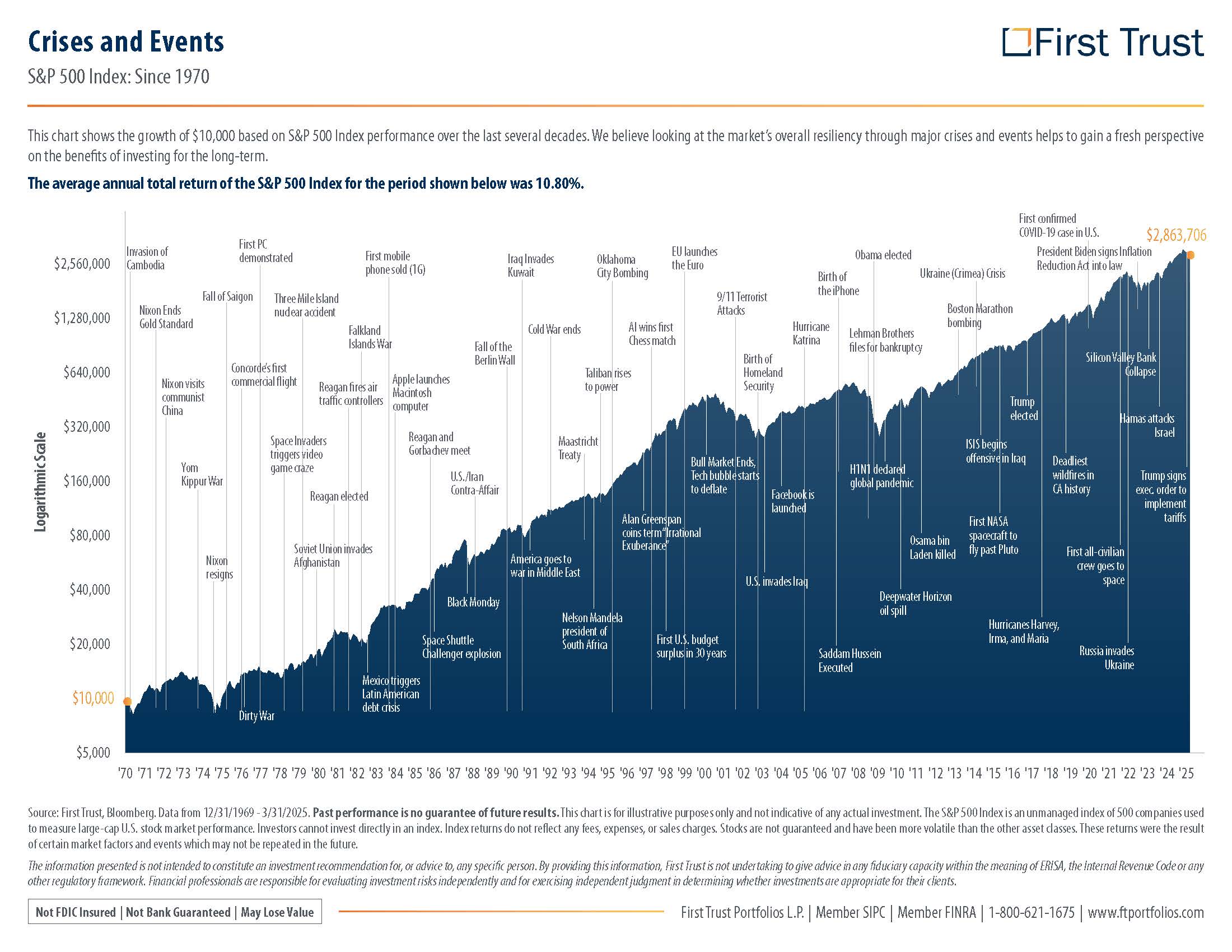
Over the last several decades, the U.S. stock market has faced recessions, geopolitical tensions, inflation spikes, and global pandemics. Despite it all, the market has continued to grow. Investors who stayed committed to their long-term investment strategy have historically been rewarded for their patience. This resilience, explained in the graph below, shows the importance of avoiding knee-jerk reactions and maintaining a diversified portfolio built for the long haul.
Timing the Market Can Hurt Long-Term Returns
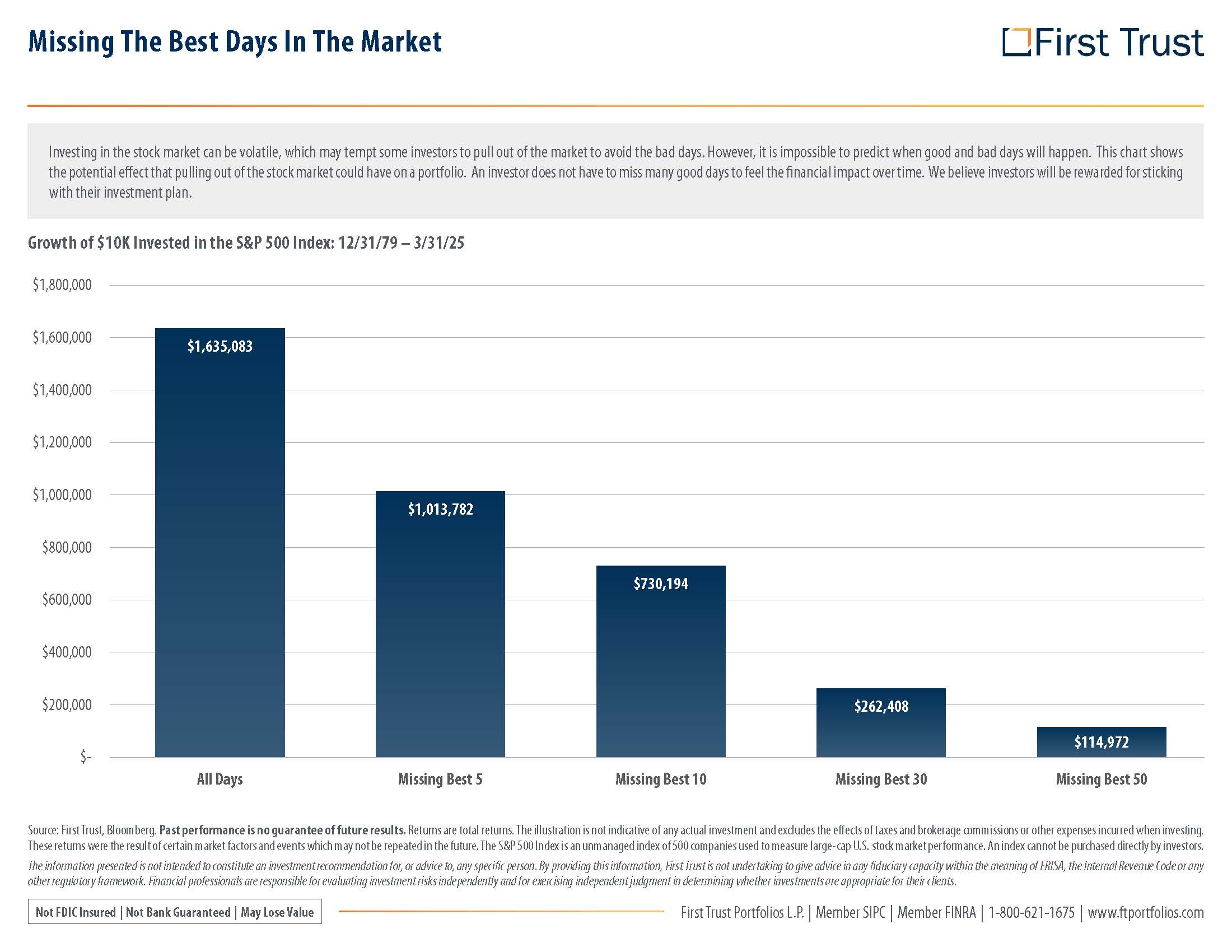
Many investors try to avoid losses by pulling out of the market during downturns. But trying to time the market—even with the best intentions—often results in missed opportunities. Some of the strongest market gains have occurred during periods of high volatility. Missing even a few of the best days in the market can significantly reduce long-term returns, as seen in the graph below.
Bull Markets Last Longer Than Bear Markets
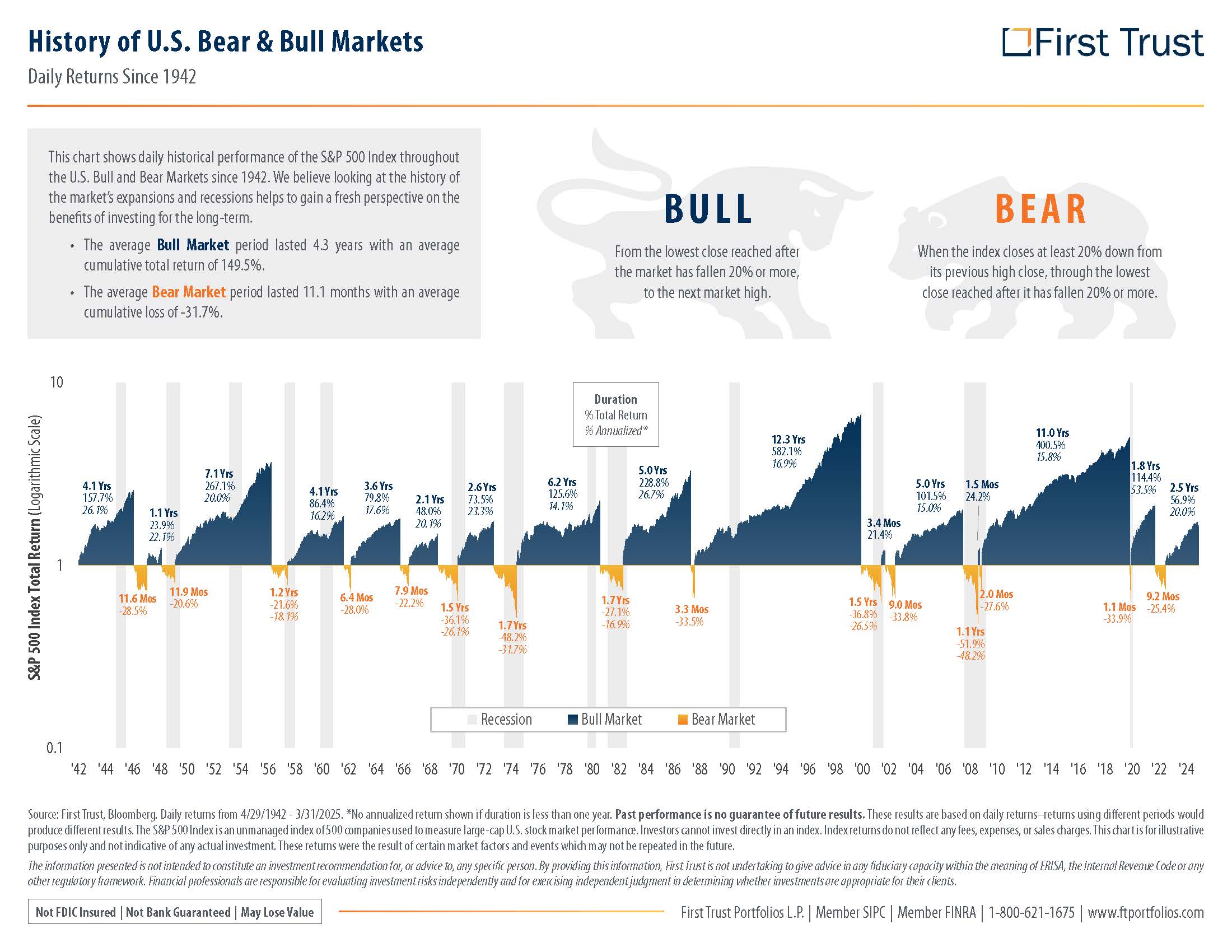
Market cycles are a normal part of investing. While bear markets can feel intense, they are typically shorter and less impactful than the bull markets that follow. On average, bull markets have lasted years and delivered significant gains. Long-term investors who remain disciplined through market corrections are often in the best position to benefit when the market rebounds.
Final Thoughts on Staying Invested for the Long Term
If recent market volatility has left you wondering whether you should make changes to your portfolio, consider the long-term view. A consistent investment plan rooted in your financial goals can help you navigate market volatility.
Need help reviewing your current strategy? Give us a call! We’re here to help you make smart, long-term financial decisions—no matter what the markets are doing today.