
By Mark Sipos, Director, LFG Tax
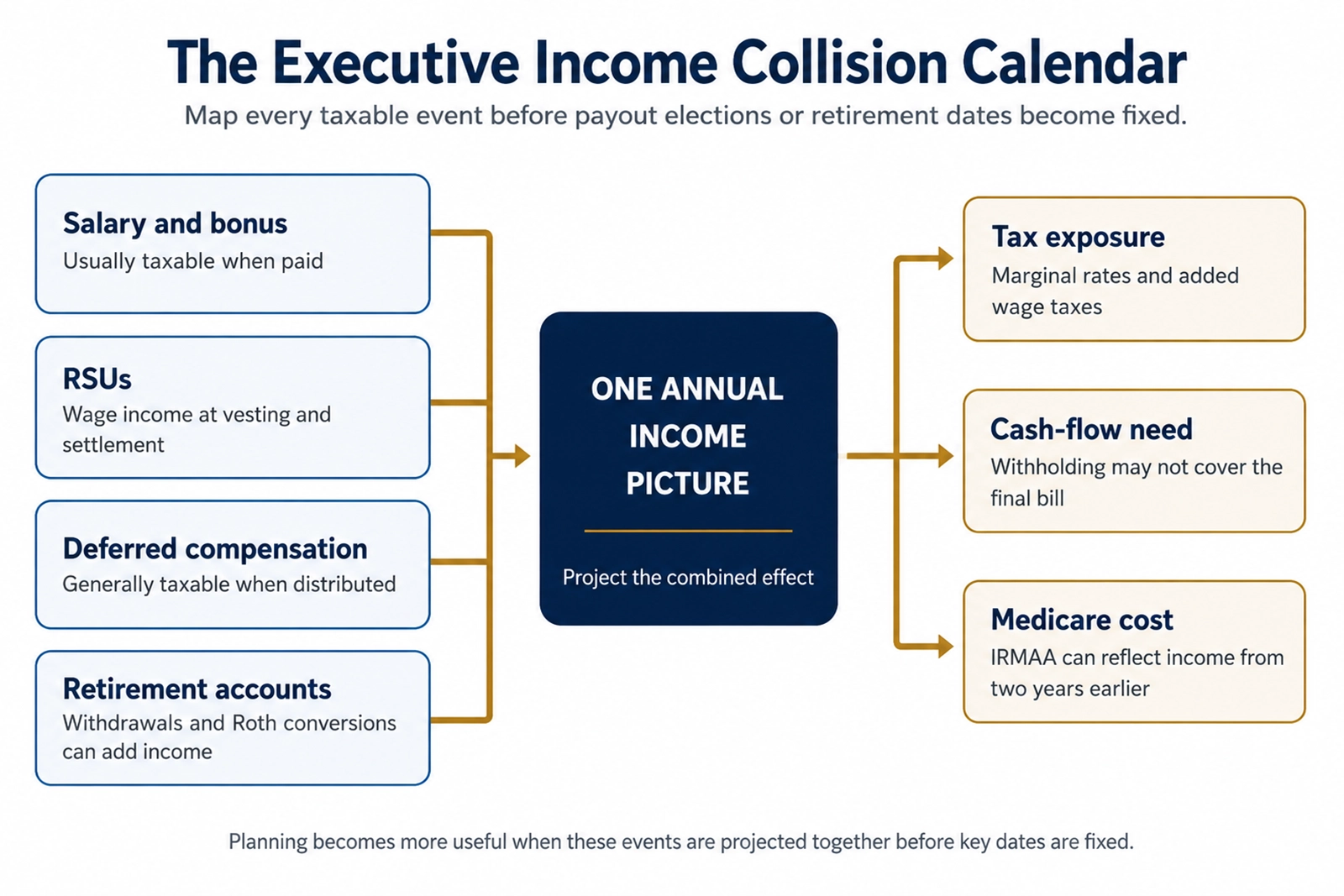
Executive compensation tax planning matters most during the final years of a career. Salary, annual bonuses, RSUs and an executive deferred compensation plan can all create wage income. Retirement accounts follow separate tax rules. Several events may reach the tax return at once. The result can include a higher marginal rate, a withholding shortfall and higher Medicare premiums later.
For executives age 55 and older, the central question reaches beyond how each benefit is taxed. You also need to know when each item becomes income and what else may occur in that year. A multi-year view can protect cash flow and clarify tradeoffs. It can also help you enter retirement with fewer surprises.
What Is Executive Compensation Tax Planning?
Executive compensation tax planning brings salary, bonuses, equity awards, deferred compensation and retirement income into one plan. The goal is to make their timing support the broader financial strategy. The process starts with tax projections and a withholding review. It also tests cash needs and each election across several years.
The taxation of executive compensation differs by benefit. A bonus usually becomes wages when paid. RSUs generally become wage income when they vest and settle. Nonqualified deferred compensation generally becomes taxable when paid, provided the plan complies with Section 409A. IRA withdrawals and Roth conversions can create ordinary income after employment ends. Each rule may look manageable alone, yet their combined effect can reshape a retirement tax strategy.
Why Income Can Collide Near Retirement
Consider a hypothetical executive who retires late in the year. She receives $400,000 of salary and bonus, $250,000 of RSUs vest, a $300,000 deferred-compensation payout begins, and she completes a $100,000 Roth conversion. Those events could place more than $1 million in the year’s gross-income picture before dividends, capital gains or a spouse’s income.
Timing creates the pressure. The deferred payout may have looked sensible when the executive made the election years earlier. The Roth conversion may also support future flexibility. In combination, however, these choices can compress several years of income into one. Executive compensation planning should therefore begin with a calendar of events, not a list of isolated strategies.
How RSUs Affect Executive Compensation Tax Planning
RSUs generally create ordinary wage income when the shares vest and settle. The tax applies even when an executive keeps the shares. Under the IRS rules for restricted property, the fair market value of property received for services generally becomes income when the property becomes substantially vested. After settlement, the holding period and tax basis begin. A later change in the share price generally becomes a capital gain or loss when the executive sells. The Lineweaver guide on how RSUs are taxed explains this sequence in more detail.
Withholding deserves a separate review. The 2026 IRS employer tax guide states that employers may withhold federal tax on supplemental wages at 22% until supplemental wages from that employer exceed $1 million for the year. The mandatory rate on the excess is 37%. An executive’s actual marginal rate may exceed 22%. Payroll can follow the rules and still leave a balance due.
A vesting event can also add more employer stock to the household. Yet salary, bonus, benefits and career may already depend on the same company. Effective executive compensation tax planning connects the tax reserve with a written concentrated-stock strategy and a clear liquidity plan.
Plan Deferred Compensation Before the Election Deadline
An executive deferred compensation plan can shift income from high-earning years into retirement. The election, however, often fixes the timing long before the tax return comes due. IRS Section 409A guidance says the first election must usually name the time and form of payment before the calendar year in which the employee earns the pay. Payments may occur only after certain permitted events. Later changes face strict timing rules.
Deferred compensation planning requires more than a comparison of today’s tax bracket with a future bracket. It’s important to review lump-sum and installment payments. You’ll want to consider cash needs, future RSU vesting, pension or Social Security income, planned Roth conversions and charitable gifts. Then, it’s also important to test company risk. The IRS describes most nonqualified plans as an unfunded promise to pay, with plan assets generally open to the employer’s creditors.
Section 409A mistakes can be expensive. A failure may bring deferred amounts into current income, along with an additional 20% tax and a premium interest tax. The employer usually administers the plan, but the executive still needs to understand the election dates and payout terms. Sound deferred comp taxation planning starts before the election window closes.
Coordinate Payouts With Retirement Income and Medicare
Retirement often brings new income sources, while some employer benefits may continue. A final bonus or severance payment can overlap with an RSU vest or deferred-compensation payout. It’s possible that IRA withdrawals and capital gains may land in that same year. This overlap may narrow an early-retirement tax window for planned gains or partial Roth conversions.
Medicare also adds a delay. Medicare generally uses income from two years earlier when calculating income-related premium adjustments, or IRMAA. The amounts change each year, but the two-year relationship remains important. Executive compensation tax planning should track the tax in the payout year. It should also track the potential benefit cost later. Lineweaver’s retirement tax-planning guide explores this connection further.
A Five-Step Executive Compensation Planning Process
1. Build a Complete Compensation Inventory
List every grant, vesting and settlement date. Add bonus estimates, election deadlines, payout schedules, option dates, severance terms, pensions and retirement accounts. Include your spouse’s income and benefits. This inventory gives executive compensation tax planning a sound starting point.
2. Project Several Tax Years
Compare a full final work year, a midyear retirement and at least two payout structures. Estimate ordinary income, capital gains, deductions, cash needs and Medicare modified adjusted gross income. It’s a good idea to use a range of stock prices instead of relying on one forecast.
3. Test Withholding and Tax Liquidity
Compare the projected tax with payroll withholding and estimated payments. The IRS estimated-tax safe-harbor rules may help an executive avoid an underpayment penalty, but they do not reduce the final balance due. Keep the tax reserve separate from money needed for retirement spending.
4. Align Tax Decisions With Investment Risk
After RSUs settle or options are exercised, measure the new employer-stock exposure. Then decide whether to retain or sell shares. A lower tax bill does not justify more concentration risk than the financial plan can support.
5. Coordinate the Team Before Elections Become Fixed
Your financial advisor, tax professional, HR or benefits adviser, and legal counsel may view the same decision from different angles. Give them the plan documents and projections well before the employer’s deadline. If you qualify for both strategies, the employer-plan exception often preserves more year-to-year control, but the decision should be evaluated in light of its tax, investment, retirement and legal effects.
At Lineweaver, this coordination is central to our Financial Quarterback approach. We help bring the appropriate professionals together and keep their recommendations aligned, so these decisions are addressed as part of one integrated financial plan rather than in isolation..
Your compensation plan, tax strategy, retirement, and legacy plans should all tell the same story. These decisions deserve one coordinated review. If you would like help, Lineweaver Wealth Advisors would be happy to have a conversation.
Common Executive Compensation Tax Planning Mistakes
Several mistakes appear often. One is waiting until after an RSU vest or payout. Others include assuming withholding equals the final tax bill and choosing a lump sum without a multi-year projection. A large Roth conversion can also collide with a deferred-compensation payout. Employer credit risk and Medicare’s income lookback deserve review as well.
Executive compensation tax planning cannot remove taxes or market risk. It can reveal the tradeoffs early enough to support informed choices, adequate liquidity and a smoother transition from employment to retirement.
Bring Every Income Decision Into One Plan
The strongest executive compensation tax planning connects dates, amounts, tax rules, withholding, cash needs and investment risk across several years. RSUs, deferred compensation and retirement distributions should work within one strategy. That structure gives an executive more control over timing and less need to react later.
Begin before the next benefit election, vesting event or retirement date. A thoughtful projection can show which choices remain flexible, which are already fixed and where coordination may create the most value.
Bring Your Executive Compensation Into One Plan
If you’re considering how these changes could affect your financial plan, we can help you evaluate the implications and identify the strategies that make sense for your broader goals. Contact our team to start a conversation.
Frequently Asked Questions
RSUs generally create ordinary wage income when they vest and settle. The employer reports the value as wages and withholds taxes. Any later increase or decrease in value generally becomes a capital gain or loss when the shares are sold.
Nonqualified deferred compensation generally becomes taxable for federal income-tax purposes when it is paid or made available. This treatment assumes the plan meets Section 409A. Employment-tax timing can differ, so review the plan and tax reporting with a qualified professional.
Compare taxes, cash needs, employer risk and other retirement income. Installments may spread taxable income, while a lump sum may reduce company exposure. A multi-year projection can test the tradeoffs.